Book Appointment

12 Best Exercises to Lose Belly Fat Easily
When clients ask me which exercises burn belly fat, they usually expect me to name an ab exercise.
I never do, and it catches most people off guard the first time.
Not because ab exercises are useless.
They build a genuinely strong core, improve posture, and protect your lower back through heavier lifts.
But belly fat does not respond to the muscle sitting underneath it.
It responds to your metabolism, your hormones, and how much energy your body burns across a whole week, not to which muscle group you happened to train on a Tuesday.
Which is exactly why the exercises most effective at reducing belly fat are rarely the ones marketed for it.
Most “flat stomach workout” content gets this backwards.
I’m Joanna Karto, founder of J Artistry Clinic in Coventry, and an NHS-trained healthcare practitioner.
If you’re new here, our overview of what J Artistry Clinic does is a good place to see the full picture of how we support women beyond just this guide.
Clients come to me after months of crunches with nothing to show for it, and I understand the frustration, it’s one of the more common conversations I have in clinic, and one of the easier ones to fix once you know what actually drives the number on the tape measure.
This guide covers the 12 exercises with the strongest clinical evidence behind them for belly fat reduction specifically: why each one works, how to actually perform it with correct form, and how to build them into a weekly plan that produces real results.
No miracle claims, no hype, just what the research, and five years of watching real clients’ progress, actually support.

Written by
Joanna Karto
Founder & Healthcare Practitioner · J Artistry Clinic, Spon End, Coventry
NHS-Trained · VTCT Accredited · 5 Yrs Clinical Experience
Published 5 August 2026 · Reviewed and updated 8 October 2026 · Every figure checked against the original paper · Next review: January 2027
4.8 / 5 · 380+ verified Google Reviews
📋 What This Guide Covers
- The honest truth about exercise and belly fat
- Which type of exercise is most effective?
- Warm-up and cool-down, done properly
- The 12 best exercises, ranked by evidence
- Calorie burn comparison: which exercises work hardest
- Short on time? Pick a workout for today
- Your 7-day workout plan
- Modifications for joint pain, back problems, and postpartum
- Three mistakes that slow belly fat loss
- How long until you see results?
- When exercise is not enough
- When to speak with your GP first
- Frequently asked questions
This guide is written for informational purposes by a qualified healthcare practitioner and does not replace personalised medical advice. Consult your GP before starting a new exercise programme if you have a health condition, are pregnant, or are recovering from surgery or injury. Read our full medical disclaimer.
Before you read another word: no article can know your job, your joints, your equipment, or your actual week. My Fitness Tracker can. It’s the free tool our team built to turn everything below into a plan made specifically for your body and your life.
Use My Fitness Tracker →Want to know what is specifically driving your belly fat before committing to a plan? A clinical assessment at J Artistry Clinic can identify hormonal factors that affect how your body responds to exercise.
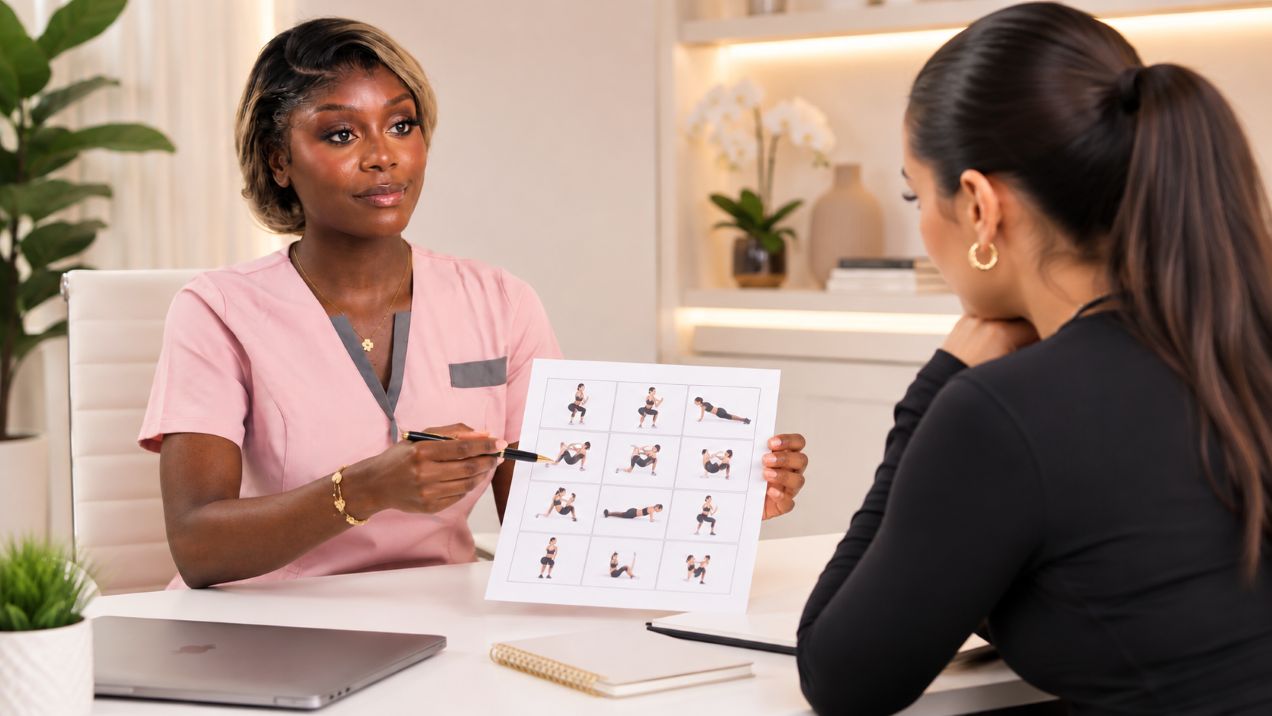
The Honest Truth About Exercise and Belly Fat
Quick Summary
No exercise burns fat specifically from the belly.
Spot reduction, the idea that exercising a body part removes fat from it, has been consistently disproven.
Belly fat reduces as part of total body fat loss, driven by a calorie deficit and metabolic improvements.
However, certain exercises are dramatically more effective than others at creating that deficit, improving the hormonal environment, and targeting the visceral fat that sits deepest in the abdomen.
Knowing which ones, and why, is what separates a plan that works from one that wastes months.
Most belly fat content starts with the answer and skips the reason.
The reason genuinely matters here, so it’s worth starting there instead.
When you exercise, you create a calorie deficit, yes, but you also trigger a cascade of hormonal and metabolic responses that go well beyond simple calorie burning: improved insulin sensitivity, reduced cortisol, increased fat mobilisation from wherever it’s stored around your body.
Two different types of belly fat respond to this cascade at different speeds.
Visceral fat, the deep fat wrapped around your internal organs, tends to respond fastest.
Subcutaneous fat, the soft layer you can actually pinch under the skin, responds more slowly and generally needs more sustained effort before you notice a real difference.
Both come down with the right approach.
But knowing which one dominates your particular situation changes how you should prioritise your time, which is what the rest of this guide is built around.
Our complete guide to how to lose belly fat in women covers this underlying biology in proper depth.
This guide is deliberately narrower: which 12 exercises deliver the best outcomes for belly fat specifically, and exactly how to structure them into a week that fits a real life.
Which Type of Exercise Is Most Effective for Belly Fat?
The evidence below applies whether you’re searching for a general belly exercise for ladies just getting started, or a more targeted belly exercise for women navigating perimenopause specifically, since the underlying mechanisms don’t change.
The Short Version
Research consistently points to the same conclusion: the most effective approach combines HIIT, resistance training, and sustainable cardio.
HIIT is best for visceral fat specifically.
Resistance training is best for long-term metabolic rate.
Sustainable cardio is best for consistency and cortisol management.
No single type outperforms the combination, and the 12 exercises in this guide cover all three categories.
Three exercise types have the strongest clinical evidence for belly fat reduction.
HIIT, high-intensity interval training, produces the greatest reduction in visceral fat per unit of time of any single exercise type.
The Maillard 2018 meta-analysis confirmed HIIT reduces abdominal and visceral fat mass significantly more than steady-state cardio does in the same amount of time.
There is a genuinely interesting study worth knowing about here, and it is not actually about HIIT at all.
In November 2025, researchers at the University of Cambridge’s MRC Epidemiology Unit published results from the Fenland Study in JAMA Network Open, one of the largest and most carefully measured studies of its kind.
They followed 7,256 UK adults for an average of seven years, using DEXA scans and wearable activity monitors rather than self-reported estimates.
What they found: people who improved both their diet quality and their physical activity together lost around 1.9kg more total body fat and 150 grams more visceral fat than people who only changed one of the two.
Even after adjusting for BMI, the visceral fat benefit held.
The subcutaneous fat benefit, interestingly, did not.
That distinction matters more than it might sound.
It means the deep, organ-surrounding fat most linked to type 2 diabetes and heart disease responds specifically to combined lifestyle change in a way the fat just under your skin does not.
This is the strongest single reason not to treat exercise and diet as separate projects.
HIIT specifically also produces EPOC, Excess Post-Exercise Oxygen Consumption, sometimes called the afterburn effect.
Metabolism stays elevated for 12 to 24 hours after a genuinely hard HIIT session, continuing to burn calories while you rest, shower, and get on with your day.
Resistance training builds muscle, which raises your resting metabolic rate permanently.
A 2022 systematic review (Wewege et al, Sports Medicine) confirmed resistance training significantly reduces body fat percentage, fat mass, and visceral fat in healthy adults.
For women, whose naturally lower muscle mass slows fat loss, resistance training is not optional, it is foundational.
Moderate cardio, walking, cycling, swimming, is the most sustainable and the most cortisol-friendly option of the three.
Research confirms consistent moderate cardio reduces visceral fat over time, particularly in women, where elevated cortisol from high-intensity training can counteract fat loss results.
It also carries the broader cardiovascular benefit the British Heart Foundation highlights as protective against heart disease, independent of any effect on belly fat specifically.
A 2025 systematic review and meta-analysis in Obesity Research and Clinical Practice confirmed that aerobic exercise produces the greatest reduction in abdominal visceral fat across all exercise types studied. Crucially, combined aerobic and resistance training produced greater visceral fat reduction than either type alone, confirming that combination approaches outperform single-modality programmes for belly fat specifically.Source: Frontiers in Physiology, systematic review 2022, and Obesity Research and Clinical Practice 2025
Warm-Up and Cool-Down, Done Properly
This is the part most belly fat exercise guides skip entirely, and it’s a genuine gap, not a footnote.
A rushed or missing warm-up is one of the most common reasons clients tell me they’ve abandoned a plan, usually because of a tweaked back or a strained calf in week two, not because the exercises themselves were wrong.
None of the 12 best exercises to lose belly fat covered in this guide are safe to start cold, particularly the HIIT and heavy resistance options.
Before every session
5-Minute Warm-Up
- 90 seconds light marching or slow jog on the spot
- 10 bodyweight squats, controlled pace
- 10 arm circles each direction
- 10 hip circles each direction
- 30 seconds gentle high knees to raise heart rate
Raises muscle temperature and heart rate gradually, which reduces injury risk and means your working sets, especially for deadlifts and squats, start from a body genuinely ready for load.
After every session
5-Minute Cool-Down
- 2 to 3 minutes easy walking to lower heart rate gradually
- Standing quad stretch, 20 seconds each leg
- Seated hamstring stretch, 20 seconds each leg
- Child’s pose or gentle back stretch, 30 seconds
- Slow, deep breathing for the final minute
Stopping abruptly after HIIT or heavy lifting keeps cortisol elevated for longer than necessary. A proper cool-down helps your body transition back to a calmer state faster.
Treat this as non-negotiable, not optional, the same way the exercises themselves are, since an injury will cost you far more training weeks than ten minutes ever will.
The 12 Best Exercises to Lose Belly Fat, Ranked by Evidence
Here’s the Headline
These 12 exercises are grouped into four categories.
Fat Burners have the highest direct calorie burn and EPOC.
Strength Builders are best for long-term metabolic rate.
Core Conditioners build the abdominal structure being revealed as fat reduces.
Accessible Options are sustainable, lower-impact approaches for all fitness levels.
The exercises within each category are ordered by clinical evidence strength.
Each exercise card below shows: how difficult it is (1 dot = beginner, 3 dots = advanced), what it is best for, why the evidence supports it, and a brief how-to guide.
🔥 Fat Burners, Highest Direct Calorie Burn + EPOC
1
HIIT Sprint Intervals
Best for: Visceral fat reduction
Advanced
The strongest evidence of any single exercise for visceral fat.
The 2018 Maillard meta-analysis confirmed HIIT produces greater abdominal and visceral fat reduction than steady-state cardio in equivalent time.
The mechanism is EPOC. After a HIIT session, metabolism stays elevated for 12 to 24 hours as the body repairs muscle, replenishes energy stores, and returns systems to baseline.
A 20-minute HIIT session produces more total fat burn than a 40-minute jog.
How to do it- 1Warm up 5 minutes light jog or fast walk
- 2Sprint at 85 to 95 percent maximum effort for 20 to 30 seconds
- 3Walk or slow jog for 40 to 60 seconds recovery
- 4Repeat 6 to 10 rounds, then cool down 5 minutes
2
Burpees
Best for: Maximum calorie burn per minute
Advanced
The burpee is a full-body compound movement engaging chest, shoulders, core, glutes, and legs simultaneously.
This broad muscle engagement creates exceptional metabolic demand, burning approximately 10 to 14 calories per minute, among the highest of any bodyweight exercise.
The explosive jump component generates meaningful EPOC.
No equipment, no excuses.
How to do it- 1Stand with feet shoulder-width apart
- 2Squat and place both hands on the floor
- 3Jump feet back to a push-up position, optionally lower chest to floor
- 4Jump feet forward to squat, then explode upward with arms overhead
3
Jump Rope (Skipping)
Best for: Accessible high-intensity cardio
Intermediate
Jump rope burns 10 to 16 calories per minute depending on intensity, more than most people expect.
It is also travel-friendly, costs under five pounds, and has a clear progression path from basic two-foot jumps to alternating feet to double-unders.
A 20-minute jump rope session can match a 45-minute jog for calorie burn, and the coordination challenge improves neuromuscular function simultaneously.
How to do it- 1Hold handles at hip height, rope behind you
- 2Use wrist rotation, not full arm swings, to swing the rope
- 3Begin with 30 seconds on, 30 seconds rest, and build tolerance
- 4Progress to 60-second rounds as fitness improves
4
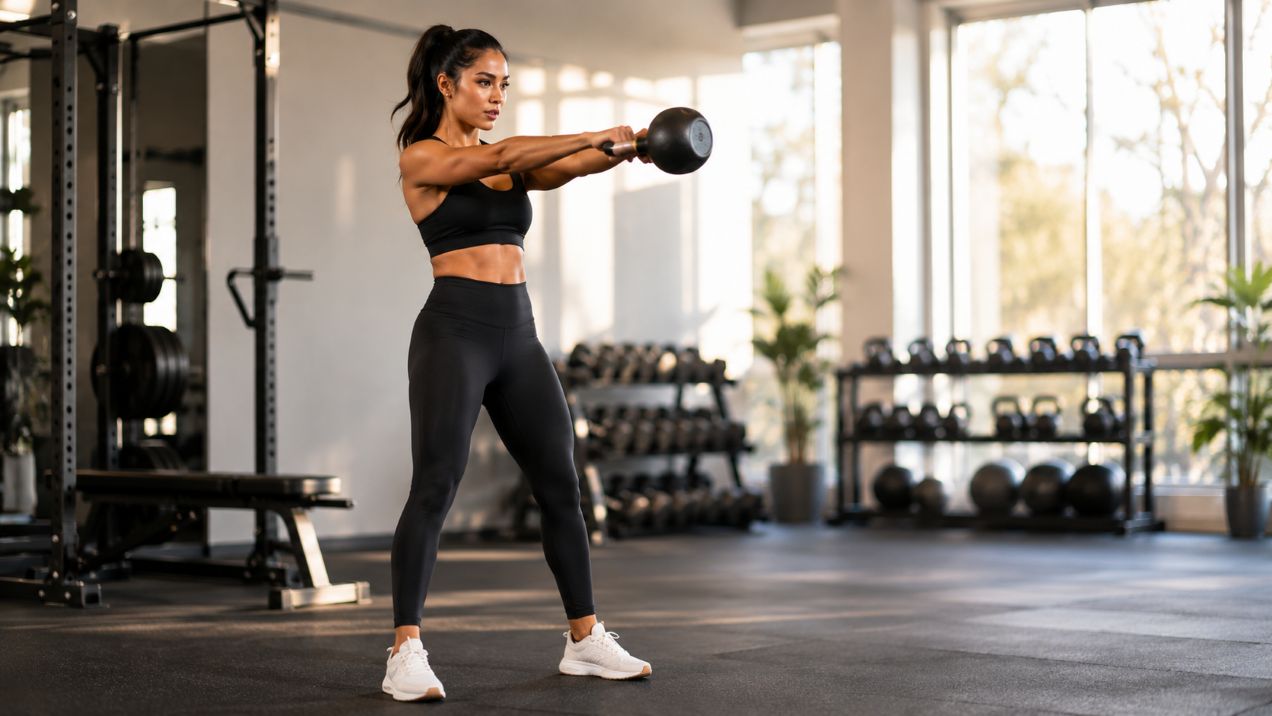
Kettlebell Swings
Best for: Cardio-strength hybrid
Intermediate
Research shows kettlebell training burns approximately 20 calories per minute during intensive sessions, comparable to HIIT running.
The hip hinge pattern targets the posterior chain: glutes, hamstrings, and lower back, while keeping heart rate high.
The rhythmic, ballistic nature makes it possible to sustain for longer than sprint intervals, making total calorie burn exceptionally high in a single session.
How to do it- 1Stand with feet shoulder-width, kettlebell between feet on floor
- 2Hip hinge (bend at hips, not knees) to grip the handle with both hands
- 3Drive hips forward explosively to propel the kettlebell to shoulder height
- 4Let it arc back as you simultaneously hinge, maintaining momentum for 15 to 20 reps
💪 Strength Builders, Raise Resting Metabolic Rate Permanently
5
Deadlifts
Best for: Long-term metabolic rate
Advanced
The deadlift engages more muscle groups simultaneously than almost any other movement: glutes, hamstrings, back, core, and forearms.
More muscle built means a higher resting metabolic rate, your body burns more calories at rest, around the clock.
The Wewege 2022 systematic review confirmed resistance training significantly reduces body fat percentage and visceral fat.
Deadlifts are the highest-return compound movement for women who want lasting belly fat reduction.
How to do it- 1Stand over bar or dumbbells, feet hip-width, weight over mid-foot
- 2Hip hinge to grip the weight, back flat and core braced
- 3Drive through heels, extending hips and knees simultaneously
- 4Stand tall, then lower with control, do not let the back round
6
Squats
Best for: Whole-body fat loss through large muscles
Intermediate
The glutes are the largest muscle group in the body.
Training them through loaded squats creates a systemic metabolic response far beyond what isolated exercises produce.
When performed with meaningful weight rather than bodyweight alone, squats consistently produce significant improvements in body composition and visceral fat in clinical studies.
They also improve bone density, important for women approaching perimenopause.
How to do it- 1Stand with feet shoulder-width, toes slightly turned out
- 2Brace core, take a breath, and push knees outward
- 3Bend hips and knees simultaneously as if sitting back onto a chair
- 4Keep chest up, lower until thighs are parallel to floor, then drive through heels to return
7
Walking Lunges
Best for: Core and lower-body combined
Intermediate
Walking lunges train each leg independently, creating balance and targeting muscle symmetry that bilateral squats miss.
The movement demands significant core stabilisation throughout each step.
When performed with dumbbells, they become a genuinely high-demand compound exercise producing meaningful EPOC.
Walking lunges are also joint-friendlier than barbell squats for many women, making them accessible across fitness levels.
How to do it- 1Stand tall, dumbbells at sides (optional for beginners)
- 2Take a large step forward with the right foot
- 3Lower the back knee toward the floor without touching
- 4Push through the front heel to rise, stepping the back foot forward to take the next lunge
▶ Core Conditioners, Build What You Are Revealing
8
Mountain Climbers
Best for: Core and cardio without equipment
Intermediate
Mountain climbers keep the core engaged while simultaneously raising heart rate to levels comparable to moderate jogging.
The alternating knee drive creates cardiovascular demand while training the deep core muscles.
Burns approximately 8 to 10 calories per minute.
Excellent for home workouts, hotel rooms, or any session where equipment is unavailable.
The dynamic nature also improves hip flexor strength, coordination, and posture.
How to do it- 1Start in high plank: wrists under shoulders, body straight from head to heels
- 2Drive the right knee toward the chest as far as comfortable
- 3Return to plank while simultaneously driving the left knee forward
- 4Alternate at pace for 30 to 60 seconds, keeping hips stable throughout
9
Plank Variations
Best for: Core stability foundation for all other exercises
Beginner
The plank builds the deep core muscles, particularly the transverse abdominis, that stabilise the spine, pull the abdomen inward, and make every other exercise on this list more effective.
A strong core enables heavier loads in deadlifts and squats, better form in HIIT movements, and greater endurance in all cardio.
Key variations: standard forearm plank, side plank, RKC plank with extreme bracing, and plank with shoulder taps.
How to do it- 1Forearms flat on floor, elbows directly under shoulders
- 2Form a straight line from head to heels, no sagging or tenting at hips
- 3Brace the core as if bracing for a punch to the stomach
- 4Breathe steadily and hold for 20 to 60 seconds, progressing weekly
10
Bicycle Crunches
Best for: Core strength development
Beginner
Electromyography (EMG) research from San Diego State University’s exercise science lab, commissioned by the American Council on Exercise, has consistently ranked bicycle crunches among the highest abdominal muscle activation of any core exercise tested, engaging the rectus abdominis and obliques simultaneously.
Important clinical nuance: they build and strengthen core muscles, they do not directly reduce belly fat.
But a well-conditioned core improves posture, supports all other exercises with better form, and creates the abdominal structure that becomes visible as fat reduces over time.
How to do it- 1Lie flat, hands lightly behind head, elbows wide
- 2Lift shoulder blades off the floor, lower back stays pressed down
- 3Bring the right elbow toward the left knee while extending the right leg
- 4Alternate in a controlled cycling motion, focusing on rotation not on pulling the neck
🏎 Accessible Options, Sustainable for All Levels and Life Stages
11
Brisk Walking
Best for: Menopause belly fat and sustainable long-term
Beginner
Walking is often underestimated, but the evidence specifically for visceral fat in post-menopausal women is strong.
A 2023 study confirmed 12 weeks of daily brisk walking significantly reduced waist circumference in women over 50.
Walking reduces cortisol rather than raising it, improving insulin sensitivity and directly addressing one of the key hormonal drivers of visceral fat accumulation.
The most sustainable belly fat exercise available.
At J Artistry Clinic, we find clients often underestimate what consistent daily walking achieves when combined with dietary improvement.
How to do it- 1Aim for 7,000 to 10,000 steps daily, at least 30 minutes of which are brisk
- 2Brisk pace means slightly breathless but still able to hold a conversation
- 3Add 10 percent incline on a treadmill or choose hilly outdoor routes to increase intensity
- 4Walk after meals where possible, post-meal walking reduces blood glucose spikes
12
Cycling or Swimming
Best for: Joint-friendly sustained calorie burn
Beginner
Cycling burns 300 to 500 calories per hour, depending on intensity, with minimal joint stress, making it accessible for women with knee issues, post-surgical clients, and perimenopausal women where high-impact exercise worsens cortisol.
Swimming adds full-body resistance training in water, burns 400 to 600 calories per hour, and research confirms water immersion actively lowers cortisol levels, making it uniquely effective for stress-related visceral fat.
Either option adapts to any fitness level and serves as excellent active recovery between HIIT and resistance sessions.
How to do it- 1Aim for 30 to 60 continuous minutes at RPE 5 to 7 (can speak, but breathing is elevated)
- 2Introduce intervals: 60 seconds at increased resistance or speed, then 2 minutes easy
- 3For cycling: add incline or resistance rather than simply going faster
- 4For swimming: mix strokes for variety and to work different muscle groups
Calorie Burn Comparison: Which Exercises Work Hardest?
Quick Summary
The figures below show approximate calories burned per 30 minutes for an average 70kg woman across the best exercises to lose belly fat covered in this guide.
These are session-only figures and do not include EPOC afterburn.
For HIIT and resistance training, the true total calorie burn is 30 to 40 percent higher once EPOC is factored in.
Calorie burn varies by body weight, fitness level, and exercise intensity, so treat these as a comparative guide rather than an exact prediction for your own session.
Exercise
Calorie burn per 30 min
Approx.
Kettlebell Swings~300 cal
Jump Rope~290 cal
HIIT Sprints~280 cal
Burpees~260 cal
Swimming~230 cal
Mountain Climbers~220 cal
Cycling (moderate)~210 cal
Walking Lunges~180 cal
Squats (loaded)~160 cal
Deadlifts~150 cal
Brisk Walking~130 cal
Plank / Crunches~60 cal
ⓘ HIIT, burpees, and resistance exercises add 30 to 40% more total calories through EPOC. Strength exercises show lower session burn but produce permanent increases in resting metabolic rate. Figures are approximate for a 70kg woman at moderate-to-vigorous intensity.
Not seeing the belly fat results your plan should produce? A hormonal health screening at J Artistry Clinic can reveal whether a hormonal factor is working against your exercise efforts.
Short on Time? Pick a Workout for Today
A full 7-day structure is where the best results come from, but some days simply won’t allow for it, and that’s fine.
Use the picker below to choose one of the best exercises to lose belly fat from this guide based on the time you genuinely have today, rather than skipping the day entirely.
10 min
Barely any time
HIIT sprint intervals, shortened to 6 rounds, or 8 minutes of burpees at a pace you can sustain.
Still triggers a meaningful EPOC afterburn effect.20 min
A proper session
Kettlebell swings, mountain climbers and plank variations as a circuit, 3 rounds with short rests.
Cardio and strength combined in one session.40+ min
Full session
Follow the full Monday resistance day or Friday cardio day from the 7-day plan below.
The complete, evidence-backed structure.Any time
Genuinely exhausted
A 20 to 30 minute brisk walk. Still lowers cortisol and supports the deficit without adding fatigue.
Better than skipping the day entirely.Your 7-Day Workout Plan to Lose Belly Fat
In Short
This plan combines all three evidence-backed exercise types in the right sequence.
Resistance training sits on non-consecutive days to allow muscle repair.
HIIT sessions are spaced to allow cortisol recovery.
Moderate cardio fills the active recovery days, alongside a genuine rest day.
It follows the pattern shown to produce the greatest combined visceral fat and body fat reduction in clinical research.
NHS Exercise Guidance
The NHS recommends 150 minutes of moderate activity plus 2 strength sessions per week as a minimum for adults.
This plan meets and exceeds that guidance while structuring sessions for maximum belly fat benefit.
If starting from a low fitness base, begin with the moderate cardio and walking sessions, and introduce HIIT and resistance training progressively over 4 to 6 weeks.
MON
Resistance
Resistance Training, Compound Focus
Deadlifts 3×8, Squats 3×10, Walking Lunges 3×12 each leg, Plank 3×30 seconds.
Rest 90 seconds between sets. Prioritise form over weight. Meaningful weight is needed to produce EPOC.
40 to 45 min
TUE
HIIT
High-Intensity Intervals
Sprint intervals 8 rounds (30 sec on, 45 sec off), or Jump Rope 10 rounds (45 sec on, 30 sec off), or Burpees 8 rounds (10 reps then rest).
5 min warm-up and 5 min cool-down essential.
25 to 30 min
WED
Recovery
Active Recovery, Brisk Walking or Easy Cycling
30 to 45 minutes at a comfortable pace. RPE 3 to 4, conversational. This maintains calorie burn while muscles recover from Tuesday.
Post-meal walks are ideal on recovery days for blood glucose management.
30 to 45 min
THU
Strength
Strength and Core Combined
Kettlebell Swings 4×15, Mountain Climbers 3×45 seconds, Bicycle Crunches 3×20, Side Plank 2×20 seconds each side.
Circuit format with 60 seconds rest between rounds for elevated heart rate benefit.
35 to 40 min
FRI
Cardio
Sustained Cardio with Intervals
45 minutes cycling or swimming. Every 5 minutes: increase resistance or pace for 60 seconds, then return to steady pace.
Low impact option, ideal for women with knee or hip considerations.
45 min
SAT
Core + Walk
Core Focus Then Brisk Walk
15 minutes: Plank variations (4 types, 30 seconds each), Bicycle Crunches 3×20, Mountain Climbers 2×30 seconds. Then 30 minutes brisk walk outdoors.
Combining core work with a walk is an effective low-intensity day that keeps the calorie deficit active.
45 min total
SUN
Rest
Complete Rest or Gentle Yoga
Muscle repair happens during rest, not during exercise. Adequate recovery prevents elevated cortisol, which would promote visceral fat storage and undermine the results of the week.
A gentle yoga or stretching session is appropriate if wanted, but true rest is equally valuable.
Rest dayWant a Plan Built Around You, Not a Generic Template?
The 7-day plan above is a strong, evidence-based starting point for most people. But your age, your job, your equipment, your height and weight, and even your relationship or caregiving responsibilities all change what a realistic weekly plan should actually look like. This is why our team at J Artistry Clinic developed My Fitness Tracker, a free tool that builds your plan around your real life rather than a one-size-fits-all template. We do not just treat you. We are committed to your lifelong health and wellness, and that starts with a plan you can genuinely stick to.
Use My Fitness Tracker →
Exercise Modifications: Joint Pain, Back Problems, Postpartum, and Starting From Low Fitness
Worth Reading If This Applies to You
Not every exercise in this guide is right for every body, right now.
If you have joint pain, a back injury, are newly postpartum, or are starting from a genuinely low fitness base, several of the higher-impact options above need modifying rather than avoided entirely.
Below is what I actually recommend to clients in each of these situations, not a generic disclaimer to see a physio and move on.
I’d rather cover this properly than pretend one plan suits everyone, because it doesn’t, and a client who follows a plan that hurts them will simply stop exercising altogether.
If you have knee or hip pain
Burpees, jump rope, and walking lunges all load the knees and hips repeatedly, which can aggravate existing joint issues.
Swap them for kettlebell swings (the hip hinge pattern is generally knee-friendly), cycling, swimming, or seated resistance band work for the same cardiovascular and muscular benefit without the impact.
Deadlifts and squats can often still be performed with reduced range of motion or a box squat variation, but this is genuinely worth a conversation with a physiotherapist first, and the Chartered Society of Physiotherapy has a find-a-physio tool if you don’t already have one.
Versus Arthritis also publishes exercise guidance specifically for people managing joint conditions, worth reading alongside this section.
If you have lower back issues
Loaded deadlifts and heavy squats are not the place to start if you have a history of back injury or current pain.
Bird dogs, dead bugs, and resistance band rows build the same posterior chain strength with far less spinal loading.
Brisk walking remains excellent and low-risk.
When you are ready to reintroduce loaded lifts, start considerably lighter than you think you need to and prioritise perfect form over any weight on the bar, and the NHS has free exercise guidance for back pain specifically worth reading alongside this.
If you are newly postpartum
This deserves its own section, honestly, but the short version: do not return to planks, crunches, or heavy lifting until you have been checked for diastasis recti (abdominal muscle separation) by a GP, midwife, or women’s health physiotherapist, generally at your six-week postnatal check at the earliest.
Walking is almost always safe from early on and remains one of the most effective exercises on this entire list regardless of life stage.
Pelvic floor considerations also matter more than most postpartum fitness content acknowledges, and the RCOG’s postnatal pelvic floor guidance is a genuinely good starting point.
Our recovery therapy service, including lymphatic drainage, also supports physical recovery in the postpartum period alongside appropriately timed exercise.
If you are starting from a very low fitness base
Skip HIIT and heavy resistance training entirely for the first four to six weeks.
Build a walking habit first, ideally daily, then add bodyweight resistance movements (squats, modified push-ups, glute bridges) twice weekly.
Introduce structured HIIT only once you can sustain 30 minutes of brisk walking comfortably.
Rushing this stage is the single most common reason people abandon exercise altogether within the first month, which helps nobody’s belly fat.
Not sure which modification actually applies to you? A quick clinical conversation can confirm what’s safe to start with, rather than guessing from an article.
Three Mistakes That Slow Belly Fat Loss
The Bottom Line
Most exercise plans for belly fat fail to deliver results not because the exercises themselves are wrong, but because of three consistent errors.
Relying on ab exercises instead of compound movements.
Doing too much high-intensity exercise without recovery.
And not combining exercise with dietary improvement.
Avoid these three and even a modest routine of the best exercises to lose belly fat starts working the way it should.
Mistake 1: Only doing ab exercises.
Sit-ups, crunches, and leg raises build the muscles beneath the fat.
They do not, and cannot, reduce the fat layer above them.
The belly fat you can see responds to your total metabolic activity: your calorie deficit, your muscle mass, and your hormonal environment.
It does not respond to which muscles are directly adjacent to it.
Ab exercises belong in your plan.
But they should be a finishing element, not the primary focus.
Mistake 2: Too much high-intensity exercise without adequate recovery.
HIIT raises cortisol, that is part of how it works, and that’s fine in the right dose.
The problem is chronic elevated cortisol, from exercising at high intensity daily without recovery, which directly promotes visceral fat storage rather than reducing it.
Mind’s guidance on physical activity and stress is a useful companion read here, since the relationship between exercise, stress, and recovery runs in both directions.
Women with hormonal belly fat driven by stress are particularly vulnerable to this specific error: doing more HIIT to try to fix it tends to make the underlying hormonal driver worse, not better.
The plan above includes two HIIT sessions per week, interspersed with recovery-focused activity.
This is deliberate.
Mistake 3: Exercising without addressing diet.
A 2025 systematic review in Obesity Research and Clinical Practice found that exercise alone consistently underperforms exercise combined with dietary improvement for visceral fat reduction.
Exercise is not a substitute for diet.
It is a complement to it.
Our guide to the best way to lose belly fat and our dedicated best diet for belly fat guide cover the dietary component in full.
How Long Until You See Results?
This is usually the first question after someone has actually started doing the best exercises to lose belly fat consistently, once the initial motivation meets reality.
Quick Summary
With the plan above, most women notice measurable waist reduction within 6 to 8 weeks.
Health markers, including blood pressure and blood glucose, often improve before visible changes appear, because visceral fat tends to respond before the softer subcutaneous layer does.
The Cambridge Fenland Study followed people over years rather than weeks, but its central finding still applies here: doing both the exercise and the dietary side together, consistently, is what produces the visceral fat reduction that neither one reliably delivers alone.
Full visible belly reduction is typically noticeable at 3 to 4 months.
After menopause, the timeline extends due to the hormonal environment.
Weeks 1 to 4: Your body is adapting.
You will likely feel better before you see changes: more energy, better sleep, reduced bloating.
The scale may not move much in the first four weeks.
Muscle gain from resistance training offsets some fat loss in the early phase.
Weeks 5 to 8: Measurable waist reduction typically begins.
Visceral fat is the first to reduce, so health markers often improve before the mirror changes.
Continue without pivoting based on slow visual progress at this stage.
Months 3 to 4: Visible belly reduction becomes noticeable.
This is when most people stop, just before the results become clear.
Consistency through months 2 and 3 is what separates lasting results from starting over every few weeks.
Month 6 onward: Meaningful, sustained changes are visible and measurable.
A waist reduction of 3 to 6cm over six months is a realistic, evidence-based expectation.
If results are significantly below this despite genuine adherence, investigate hormonal factors, not harder training on the same plan that is not working.
📈 Want to actually track your waist and weight trend against a timeline like this one, instead of guessing? My Fitness Tracker logs both automatically and shows you the trend line.
When Exercise Is Not Enough
From Joanna, on women who do everything right and still struggle
A good third of the women who come to me for a body contouring consultation have already been doing everything right for months.
They’ve read the articles, found a trainer, cut the wine down to weekends.
And there’s still one stubborn patch that has not moved a centimetre.
When that happens, more exercise intensity is rarely the answer, and I’ll say so even when it is not what someone wants to hear in that moment.
The real question is what the hormonal environment actually looks like.
Cortisol running high from chronic stress?
Oestrogen shifting with perimenopause?
Insulin resistance nobody has tested for?
Or, less commonly than people assume but more often than it should be missed, fibroids creating abdominal distension that no amount of training will ever touch.
We do not know until we look.
It is the slightly annoying but necessary answer: assessment before intervention, every time, no exceptions.
Hormonal health screening at J Artistry Clinic tests the key biomarkers, thyroid, oestrogen, cortisol, fasting insulin, and others, that most commonly make exercise-resistant belly fat harder than it should be.
If you have been genuinely consistent with exercise for 3 to 4 months without the results the evidence predicts, health screening is the logical next step, not a new workout programme.
🕑 Not sure whether your current routine actually fits your schedule, fitness level, and goals? Build a personalised weekly plan free with My Fitness Tracker by J Artistry Clinic.
If your belly changes are accompanied by heavy periods, pelvic pressure, or firm lower-abdominal protrusion, read our guide to why fibroids may be making belly fat almost impossible to shift.
For women who have established their lifestyle foundations and want to target specific areas of stubborn subcutaneous fat that exercise has not fully addressed, clinical non-surgical body contouring at J Artistry Clinic is clinically appropriate and effective at that stage, and our dedicated stomach and tummy fat removal guide covers those specific treatment options in more depth.
Some clients also find IV vitamin therapy useful for energy support while building up a new training routine, particularly during the first few demanding weeks of the plan above.
When to Speak With Your GP Before Starting
Most of the best exercises to lose belly fat covered in this guide are safe for healthy adults to begin gradually, but a handful of situations genuinely warrant a conversation first.
See Your GP First If Any of the Following Apply
Most healthy adults can begin a walking and bodyweight exercise programme without GP clearance.
Speak with your GP before starting intense exercise if you have uncontrolled high blood pressure or heart conditions.
Type 2 diabetes or significant insulin resistance.
A history of back or joint injury that may be aggravated by compound lifts.
Recent surgery or post-operative recovery.
Pregnancy or the immediate post-partum period, within 6 weeks of birth.
Or any unexplained symptoms, chest pain, severe breathlessness, or significant fatigue, that exercise could exacerbate.
Starting light and building gradually is always safer than beginning at maximum intensity.
If you are managing an existing health condition, the NHS has specific guidance on exercising safely alongside a long-term condition worth reading before you start.
Exercise · Wellness · Clinical Insight
Follow J Artistry Clinic for Real Exercise Content, No Hype
Honest exercise guidance, belly fat science, and clinical wellness insights for women, from Joanna Karto’s NHS-trained perspective.
Best Exercises Belly Fat
HIIT Women
Strength Training
Body Transformation
Follow @jartistryclinic on Instagram →
Two situations change what works, and both have their own guide. If you are navigating the menopause transition, muscle loss becomes as important as fat loss, which our guide to menopause belly fat covers in detail. And if you have wondered whether a supplement would speed this up, our evidence review of belly fat burners gives an honest answer.
Men have a slightly different starting point here, because of where fat is stored and the waist thresholds that apply. Our companion guide covers the 9 best ways to lose belly fat for men in full.
Frequently Asked Questions, Exercises to Lose Belly Fat
The questions people actually search, answered directly and honestly.
Whether you searched for good exercises to lose belly fat, great exercises to lose belly fat, or specifically an exercise to reduce belly fat for female at home with no gym required, the answers below cover the same evidence base this whole guide is built on.
No, and this is called spot reduction, the idea does not hold up however appealing it sounds.
You cannot choose which part of your body loses fat first by targeting it with specific movements.
What you can do is get much better at creating the conditions your whole body needs to lose fat generally, belly included.
That comes down to a calorie deficit combined with the metabolic and hormonal shifts triggered by the right kind of training.
HIIT and resistance training do this more efficiently than most other exercise types, largely through the combination of direct calorie burn, the EPOC afterburn effect explained further down this page, and genuine hormonal improvement.
HIIT sprint intervals have strong research evidence for visceral fat reduction specifically.
The 2018 Maillard meta-analysis confirmed HIIT reduces abdominal and visceral fat mass significantly more than steady-state cardio in equivalent time.
Separately, a 2025 Cambridge Fenland Study published in JAMA Network Open followed 7,256 UK adults for an average of seven years and found that people who improved both diet and physical activity together lost roughly 150 grams more visceral fat than those who changed only one, a benefit that was specific to visceral fat and did not hold for subcutaneous fat.
In practice, this means resistance training and dietary improvement combined with HIIT produce better long-term results than any single approach on its own.
The combination consistently outperforms either type alone, in this study and in the wider exercise science literature.
The NHS recommends 150 minutes of moderate activity plus 2 strength sessions per week as a minimum.
For meaningful belly fat reduction, research supports 4 to 5 exercise days weekly: 2 resistance training sessions, 1 to 2 HIIT sessions, and 1 to 2 moderate cardio sessions.
Rest days are equally important.
Exercising daily without adequate recovery raises cortisol, which promotes visceral fat storage and can undermine your results.
Exercise alone produces modest belly fat reduction, but results are significantly less than the combination of exercise and dietary improvement.
A 2025 systematic review in Obesity Research and Clinical Practice found that exercise alone reduces visceral fat, but diet-plus-exercise interventions consistently outperform exercise alone.
The practical reason: a 30-minute run burns approximately 250 to 350 calories.
A moderate dietary change can remove 500 calories from daily intake with minimal effort.
Both together produce the fastest and most meaningful results.
Read our guide to the best way to lose belly fat for the full combined approach.
HIIT is more effective than steady-state cardio for visceral fat reduction per unit of time, per the Maillard 2018 meta-analysis.
A 20-minute HIIT session typically burns equivalent or more visceral fat than a 40 to 50 minute steady jog, due to the EPOC afterburn effect.
However, steady-state cardio has advantages: it is more sustainable long-term, produces lower cortisol, and is accessible for women with joint issues or significant hormonal belly fat where excess cortisol makes HIIT counterproductive.
The optimal weekly plan combines both, as shown in the 7-day plan above.
Planks and sit-ups do not directly reduce belly fat.
They build and strengthen the core muscles underneath the fat, but spot reduction has been consistently disproven across decades of research.
Planks are still valuable because a strong core makes every other exercise more effective, improving form in deadlifts and squats, protecting the lower back during HIIT, and enabling heavier loads over time.
Both planks and crunches should be included in your plan, but as a supporting element, not the primary belly fat strategy.
Most women begin to notice measurable waist reduction within 6 to 8 weeks of consistent exercise combined with a moderate calorie deficit.
Visceral fat tends to respond before subcutaneous fat, so health markers such as blood pressure and blood glucose often improve before visible changes appear.
Visible belly reduction is typically noticeable at 3 to 4 months.
After perimenopause and menopause, the timeline extends.
The intervention needs to be proportionally more consistent to overcome the natural hormonal fat redistribution happening at this life stage.
After menopause, resistance training becomes the most important exercise type because muscle mass declines rapidly without it, and that muscle loss is the primary driver of reduced resting metabolic rate.
Deadlifts, squats, and kettlebell swings are particularly effective.
Brisk walking is uniquely valuable for post-menopausal belly fat, it reduces cortisol rather than raising it, and multiple studies confirm it reduces waist circumference specifically in women over 50.
Low-impact cycling and swimming are excellent for women with joint considerations common at this life stage.
HIIT should be modified for intensity but remains effective in shorter sessions of 15 to 20 minutes.
Read our full guide to how to lose belly fat in women for detailed guidance on the menopausal life stage specifically.
Walking alone can produce meaningful belly fat reduction, particularly in women over 50 with menopausal belly fat.
Research confirms 12 weeks of daily brisk walking significantly reduced waist circumference in post-menopausal women.
Walking lowers cortisol, improves insulin sensitivity, and creates a calorie deficit without the joint stress of high-impact exercise.
For faster and more complete belly fat reduction across all age groups, walking works best as part of a plan that also includes 2 resistance training sessions per week.
But walking is a genuinely effective starting point and a solid long-term foundation.
Two mechanisms, working together.
During the session itself, resistance training burns calories and produces EPOC, keeping your metabolism elevated for hours afterward.
The bigger effect happens over time, though.
Resistance training builds lean muscle, and muscle burns more calories at rest than fat does.
Each kilogram of muscle you add raises your resting metabolic rate by roughly 13 calories a day, for as long as you maintain that muscle.
It sounds small per kilogram, but it adds up meaningfully across a training block.
This matters more for women than it tends to get credit for.
Because women naturally carry less muscle mass than men, building it through resistance training is one of the highest-leverage long-term strategies available for belly fat specifically.
The Wewege 2022 systematic review backs this up directly, confirming resistance training significantly reduces body fat percentage, fat mass, and visceral fat in healthy adults.
EPOC stands for Excess Post-Exercise Oxygen Consumption, though most people know it as the “afterburn effect.”
After intense exercise, particularly HIIT and heavy resistance training, your body keeps consuming extra oxygen for hours as it repairs muscle tissue, restocks energy stores, and generally puts itself back together.
That elevated oxygen use costs energy, which means you keep burning calories well after you’ve finished, showered, and moved on with your day.
A hard HIIT session can produce EPOC lasting 12 to 24 hours.
Practically, that means a 25-minute HIIT workout burns noticeably more total calories, including from fat stores, than the number on your fitness tracker suggests during the session itself.
It is a large part of why HIIT consistently outperforms steady-state cardio for visceral fat reduction, even accounting for the shorter time spent actually exercising.
Want Results That Match Your Effort?
If you have been consistently doing the best exercises to lose belly fat from this guide and still not getting the results the evidence predicts, something is working against you. J Artistry Clinic offers hormonal health screening to identify what, and clinical body contouring for stubborn subcutaneous fat once your lifestyle foundations are established. Based in Coventry. Supporting women across the UK.
Prefer to call? +44 7591 092255, Mon to Sat 10am to 8pm
Prefer to start on your own first? Build a free personalised plan with My Fitness Tracker
📍 J Artistry Clinic · Arches Estate, Spon End, Coventry, CV1 3JQSame-week appointments available · Supporting women across the UK
Privacy Policy
Clinical References and Evidence Sources
- Maillard F, et al. (2018). Effect of high-intensity interval training on total, abdominal and visceral fat mass: A meta-analysis. Sports Medicine. pubmed.ncbi.nlm.nih.gov
- Wewege MA, et al. (2022). The effect of resistance training in healthy adults on body fat percentage, fat mass and visceral fat: A systematic review and meta-analysis. Sports Medicine. pubmed.ncbi.nlm.nih.gov
- Aryannezhad S, et al. (2025). Concurrent Changes in Diet Quality and Physical Activity and Association With Adiposity in Adults. JAMA Network Open. DOI: 10.1001/jamanetworkopen.2025.45232. jamanetwork.com
- MRC Epidemiology Unit, University of Cambridge (2025). Improve diet and increase physical activity at the same time to limit weight gain, Fenland Study suggests. mrc-epid.cam.ac.uk
- Systematic review (2025). Aerobic exercise produces the greatest reduction in abdominal visceral fat across exercise types studied. Obesity Research and Clinical Practice, 2025.
- Frontiers in Physiology (2022). Systematic review: combined aerobic and resistance exercise produces greater visceral fat reduction than either type alone. frontiersin.org
- BOXROX (2026). Best exercises for women to burn visceral fat, evidence review. boxrox.com
- Mayo Clinic (2026). Belly fat in women: taking and keeping it off. mayoclinic.org
- NHS (2024). Physical activity guidelines for adults aged 19 to 64. nhs.uk
- NHS (2024). Exercise and activity: how much should adults do? nhs.uk
- British Heart Foundation (2024). Exercise and physical activity for heart health. bhf.org.uk
- Melanson EL, et al. (2009). Exercise and visceral fat mobilisation mechanisms. Medicine and Science in Sports and Exercise. Via PubMed
- NICE (2023). Obesity: identification, assessment and management. nice.org.uk
- NHS (2024). Waist size and your health, measurement guidelines for women. nhs.uk